
What is microdosing good for?

Microdosing strengthens the nervous system, self-healing and even makes brain cells grow.
The most popular reasons for microdosing are all signs of a nervous system on fire:
- Depression & anxiety
- Lack of drive
Addiction - Inability to concentrate
- Tension or psychosomatic pain
- Numbness / brain fog
Magic mushrooms (and truffles) contain active ingredients that strengthen and grow nerves.
You gain new strength, regain access to your feelings and a healthy sense of self.
A little better every day
With microdosing there is no intoxication, no addiction, no distorted perception.
In return, it offers the chance to feed the brain every day and strengthen the connection to our intuition.
The effects sometimes seem like small miracles, but are simply the result of a nervous system that is recovering.
Mindset
- More flow states
- Reduced stress
- Facilitates meditation
- More eloquence
- Improves the memory
- Increases „lateral“ thinking (recognize connections!)
Emotions
- Relief from persistent conditions such as depression, anxiety, ADD/ADHD and PTSD
- Mood enhancement
- Improves emotional intelligence
- Increases motivation (e.g. for positive lifestyle changes)
- Openness and self-forgiveness
- Increases creativity
- Mindfulness, presence and calm
Body
- Improves athletic endurance
- Reduces inflammation
- Helps the body to improve hormonal balance
- Increased energy in general (without nervousness or subsequent crash)
Our nervous system
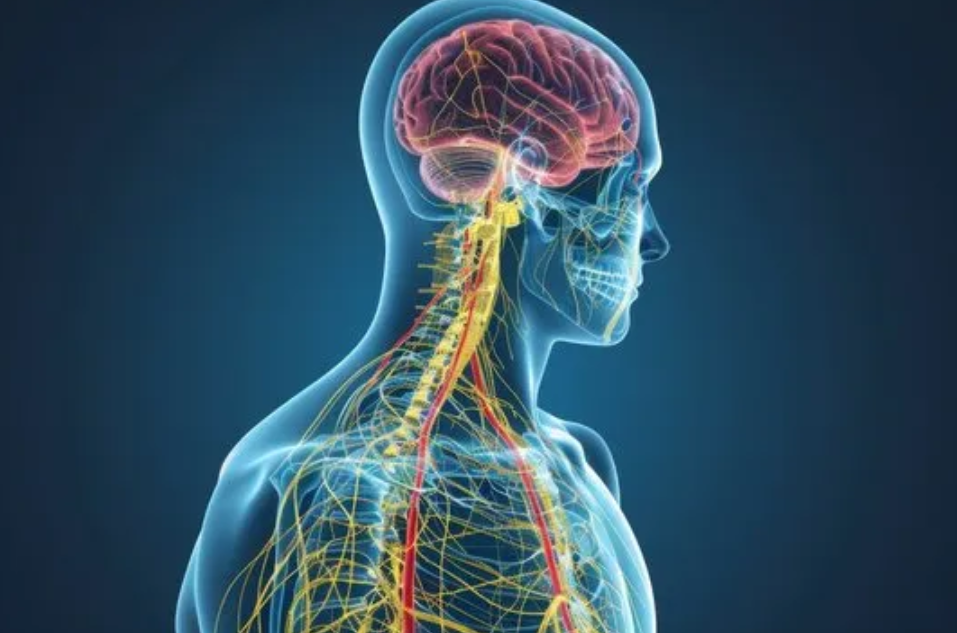
...works with messenger substances.
Often the origin of constant stress and pain is old trauma that we don't even consciously remember.
But our nervous system remembers and is impaired.
A lack of certain substances leads to mental problems, low energy and various aches and pains.
This deficiency can be compensated for by microdosing.
The mushroom provides the building material, the body is the master builder.
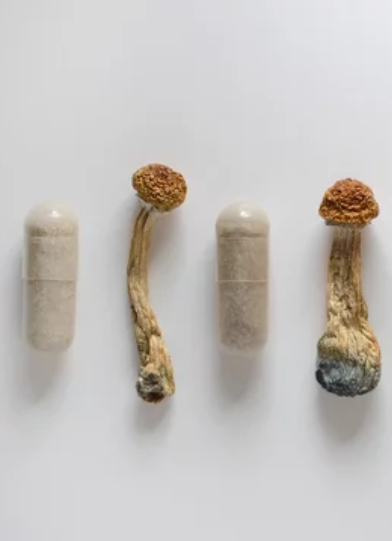
Psilocybin
This alkaloid docks onto certain brain receptors (5HT-2A) and triggers various processes there. In large quantities, this changes perception and opens up consciousness.
However, there is no change in perception with microdosing. What is more interesting here is the effect on the body, namely stronger self-healing.
Whether physical or psychological, healing requires strength and resources. With microdosing, these are suddenly available in abundance and the body uses them in the way it can use them best.
New nerves grow, old nerves heal.
Psilocybin has been shown to stimulate the growth of new brain and nerve cells. This allows the body to make new connections and is extremely promising for the treatment of neurodegenerative diseases
(e.g. Alzheimer's, dementia, multiple sclerosis, Parkinson's, etc.).
However, the mushrooms do not simply „conjure up“ these new nerves, despite the name 😉
Stimulation of the 5HT-2A receptor increases the release of the nerve growth factor BDNF. Existing neurons also benefit from this, as it enables them to form new connections.
New nerve cells
BDNF allows the body to form new nerve cells in the brain and throughout the central nervous system, as well as to regenerate damaged or diseased cells.
The existing neurons can also form new dendrites more easily. These are like antennae for signals from other nerve cells. The nervous system can form new and stronger networks.
A study on mice and pigs has shown that the synapse density in the prefrontal cortex in particular explodes. The day after taking psilocybin, the mammals already had a 10% higher density of synapses.
Namely: Permanent.
After 1 month, the mushroom mice still had a thicker brain, even though the psychedelic-visionary effects were suppressed at the same time as ingestion. In other words: you don't have to trip to benefit from it.
At least as a mouse. Fortunately, humans and mice are not so dissimilar - which is the reason why they are used for studies in the first place.
Source: https://pubmed.ncbi.nlm.nih.gov/34228959/
Psilocybin induces rapid and persistent growth of dendritic spines in frontal cortex in vivo
“What does the prefrontal cortex do?”
... I asked myself while reading this study.
Wikipedia lists the following:
Functions and tasks of the prefrontal cortex include
- Important center of the Working memory
- Anticipating the consequences of actions
- Participation in action management
- Planning of future actions
- Problem solving[4]
- Emotion regulation
- Self-control[5]
- Management of risks and Fear
- Participation in subjective evaluation, moral evaluations and Empathy[6]
- Participation in default mode network[7]Resting state network (relaxing, daydreaming)
Funny, because this could just as well be a list of reasons why people start microdosing in the first place. Feel better, think better, act better.
As a long-term consequence, microdosing apparently not only makes it easier to learn new things. In particular, you can rewrite unwanted thought and behavior patterns on your own.
And with less fear, more empathy and more clarity.
Almost as if Mother Nature wasn't cruel at all. People can be traumatized and trauma permanently changes our view of the world, our behaviour and our attitude to life.
But the tools for solving the trauma are literally springing up like mushrooms.
There are many other effects, such as increased alertness and reduced inflammation (anti-inflammatory effect).
In case of overdose
To overdose with microdosing, you have to make a big mistake with the dose. The resulting effects are often extremes of the actually desired effects. The microdose itself does not cause any adverse effects in the body, but makes them to visible if you take too much.
Like when you want to take a hot shower but turn the tap on too far...
For example:
- Manic states instead of mood enhancement
- Nervousness instead of increased attention
- Emotional outbursts instead of increased emotional intelligence.